Travel Stories

Burj Al Arab

By Qunoosh Published: March 01, 2024 Updated on: September 25, 2026 5 min read
Back to Blog Articles

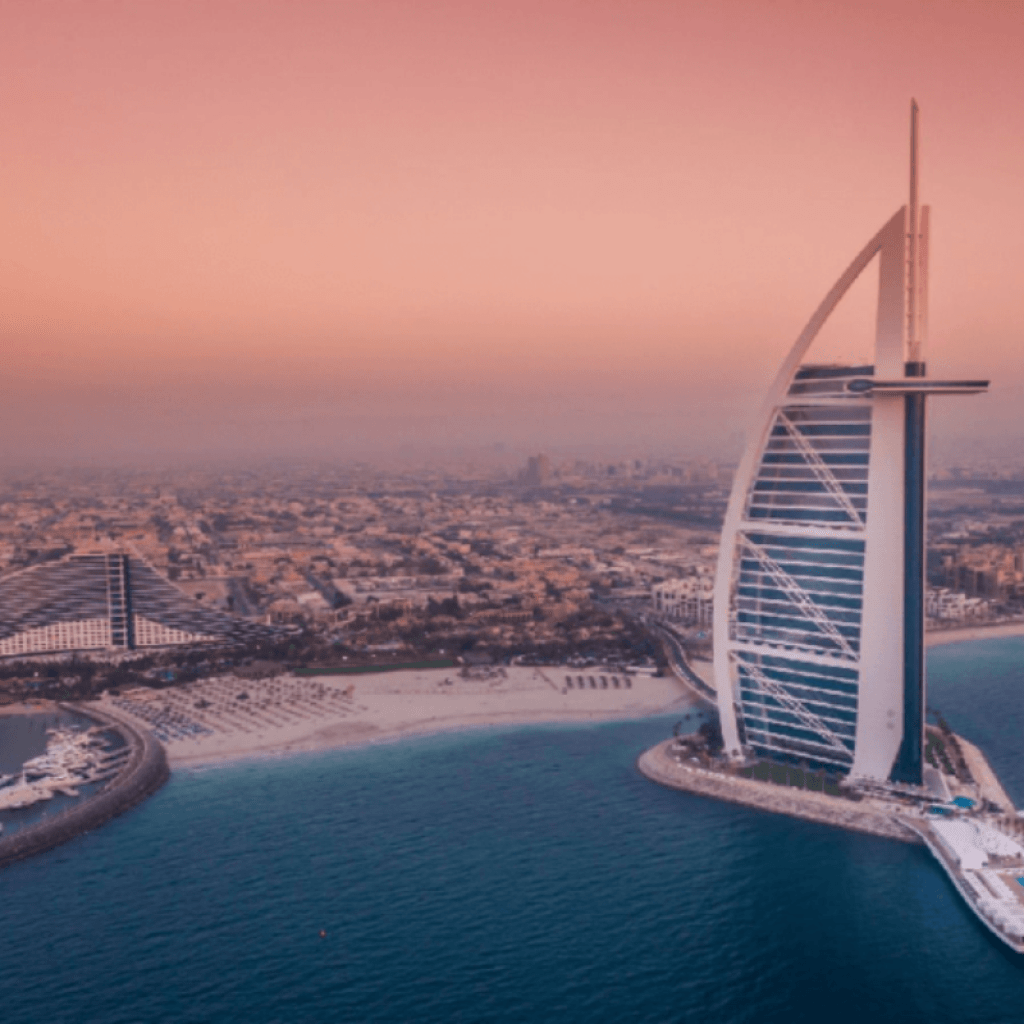
The Burj Al Arab (Arabic for "Tower of the Arabs") is a premium hotel in Dubai, United Arab Emirates. Even though 39 percent of its entire height is a non-occupiable area, it is one of the world's highest hotels. It is managed by the Jumeirah hotel company.

Burj Al Arab

Burj Al Arab is situated on an artificial island 280 meters (920 feet) off Jumeirah Beach, connected to the mainland by a private curving bridge.

The shape of the Burj Al Arab

The structure's form is intended to imitate a ship's sail. A 210-meter-high helipad is built near the roof (689 feet).

Architectural height

321 m (1,053 ft)

The highest floor has a height of 197.5 meters (648 ft)

Location

The original name for the coastline area where the Burj Al Arab and Jumeirah Beach Hotel are located was Chicago Beach. The hotel is located on a reclaimed island 280 meters (920 ft) offshore from the beach of the former Chicago Beach Hotel. The name of the location comes from the Chicago Bridge & Iron Company, which used to weld massive floating oil storage tanks known as Kazzans on the site.

Structure Design and Construction

  • Architect: WKK Architects' Tom Wright
  • Jumeirah Group is the developer.
  • Atkins is the structural engineer.
  • Murray & Roberts / Concor are the main contractors

The interdisciplinary company Atkins, directed by architect Tom Wright, created the Burj Al Arab. The design and construction were overseen by Rick Gregory, a Canadian engineer at WS Atkins. The island's development began in 1994 and at its peak employed up to 2,000 construction workers. It was designed to look like a J-class yacht's billowing spinnaker sail. Two "wings" extend out in a V to form a gigantic "mast," with a big atrium enclosing the area between them.

Murray & Roberts, now Concor, and Al Habtoor Engineering, a South African construction company, built the hotel. The interior designs were led and produced by KCA International's Khuan Chew and John Coralan, and the project was completed by the UAE-based Depa Group. On December 1, 1999, the building initially opened its doors.

Rebecca Gernon, an Irish architect, created the hotel's helipad. The helipad, placed on the 59th floor of the building, has served as a vehicle race track, a boxing ring, a tennis match, and the starting point for a marathon for the world's highest kite surfing leap.

Burj Al Arab Geographies

Several aspects of the hotel necessitated difficult engineering achievements. The hotel is built on a 280-meter-long (920-foot-long) artificial island. To construct a foundation, the workmen sank 230 40-meter-long (130-foot) concrete piles into the sand.

To prevent the foundation from erosion, engineers created a layer of massive stones on the ground surface that is surrounded by a concrete honeycomb pattern. The ground was reclaimed from the water after three years, yet the construction was completed in less than three years. The structure was built with around 70,000 m3 (92,000 cu yd) of concrete and 9,000 tonnes of steel.

The structure's atrium is 180 meters (590 feet) tall. The 18-story atrium's north-facing façade is surrounded by 12 individually tensioned two-layer membrane panels.

The Burj Al Arab is the world's sixth tallest hotel, following the Gevora Hotel, JW Marriott Marquis Dubai, Four Seasons Place Kuala Lumpur, and Rose and Rayhaan by Rotana. If mixed-use buildings were excluded, the Burj Al Arab would be the world's third tallest hotel. The Rose Rayhaan, also in Dubai, is 333 meters (1,093 feet) tall, 12 meters (40 feet) taller than the Burj Al Arab, which is 321 meters (1,053 feet).

Accommodations and suites

The Jumeirah Group manages the hotel. Despite its massive size, the Burj Al Arab features just 28 double-story floors and 202 bedroom suites. The smallest suite measures 169 square meters (1,820 square feet), while the largest measures 780 square meters (8,400 sq ft).

The suites' design elements are a combination of east and west. White columns have a lot of power. Bathrooms are decorated with mosaic tile patterns.

The Royal Suite, which costs $24,000 a night, is ranked number 12 on CNN Go's list of the world's 15 most expensive hotel suites in 2012. The Chinese market is quite popular at the Burj Al Arab, accounting for 25% of all reservations in 2011 and 2012.

Facilities

The hotel boasts its beach as well as a shuttle service that includes Rolls-Royces and a helicopter.

Restaurants

The hotel features six restaurants, including:

  • Al Muntaha ("The Ultimate"), is a viewpoint in Dubai that is 200 meters (660 feet) over the Persian Gulf. It is supported by a complete cantilever that stretches 27 meters (89 feet) from each side of the mast and may be reached through a panoramic elevator.
  • Al Mahara ("Oyster"), a gigantic seawater aquarium with a capacity of 990,000 L (260,000 US gal), is accessible through a simulated submarine expedition. The tank's wall is around 18 cm (7.1 in) thick, built of acrylic glass to resist the water pressure
  • Al Iwan    The Middle Eastern food provided at Al Iwan is the main attraction. Al Iwan charges AED1000 (about) for two people. Opening hours are 12:00 p.m. to 3:30 p.m.
  • Junsui   Junsui specializes in Pan-Asian cuisine. Junsui charges AED 800 (about) for two people. The hours of operation are 7:00 a.m. to 10:30 a.m.
  • Sahn Eddar Sahn Eddar charges AED 700 (about) for two people. International cuisine is the main course at Sahn Eddar. The Sahn Eddar restaurant is open from 8:00 a.m. until 11:30 p.m.
  • Skyview Bar Finger Food is the main food served at Skyview Bar. Skyview Bar charges AED 1000 (about) for two people. The Skyview Bar restaurant is open from 7:00 p.m. until 2:00 a.m.
  • Bab Al Yam Multicuisine is the main cuisine provided at Bab Al Yam. Bab Al Yam charges AED 800 (about) for two people. The hours of operation are 7:00 a.m. to 9:00 a.m.
  • Juna Lounge   Finger Food is the main food offered at Juna Lounge. Juna Lounge charges AED500 (about) for two people. The hours of operation are 12:30 p.m. to 3:30 p.m.

Ranking

The Burj Al Arab is designated as a five-star hotel, the highest government classification. While the hotel is occasionally referred to as "the world's only ‘seven-star' hotel," the hotel's management insists that they have never done so. The name was coined by a British journalist who took a tour of the hotel before it was officially inaugurated.

The journalist referred to the Burj al Arab as a seven-star hotel because it was "greater beyond anything she had ever seen." "There's not much we can do to stop it," a Jumeirah Group spokeswoman said. We don't think it's a good idea to use the word. It has never appeared in any of our marketing materials.

Burj Al Arab Entrance Ticket Details

  • AED 190 for a tea tour.
  • To see the Burj Al Arab from the inside, you must make a reservation at one of the hotel's restaurants.
  • A better option is to take a "tea tour," which costs 190 AED per person and allows you to easily see the building.
  •  If you don't want to spend money on it, keep in mind that it is a skyscraper that is impossible to miss if you travel anyplace near it, particularly Jumeirah Beach; it is also rather pricey.

The most convenient method to gain access to the Burj al Arab is to arrange an afternoon tea.

Before you even get to the meal, the restaurants of the Burj al Arab are, as you might expect, masterpieces.

On the 27th floor, you'll find the Muntaha Restaurant and the Skyview Bar and Restaurant. They are both 200 meters high and provide guests with incredible panoramic views over Dubai's beaches, the Dubai Marina, the Palm Jumeirah, and the skyscrapers of Downtown Dubai in the distance.

At the Burj al Arab, there are two-afternoon tea restaurants with a variety of options:

In the Skyview lounge, Sky Tea is provided
This is one of Dubai's most lavish Afternoon Tea experiences, located on the 27th level of this landmark structure. Before going on to a wonderful range of desserts, try date juice and unusual savories.

Every day, there are two seats: one at 1:00 p.m. and another at 4:00 p.m. Adult afternoon tea costs 500 AED, while children aged 8 and above pay 315 AED.

Sahn Eddar's Afternoon Tea
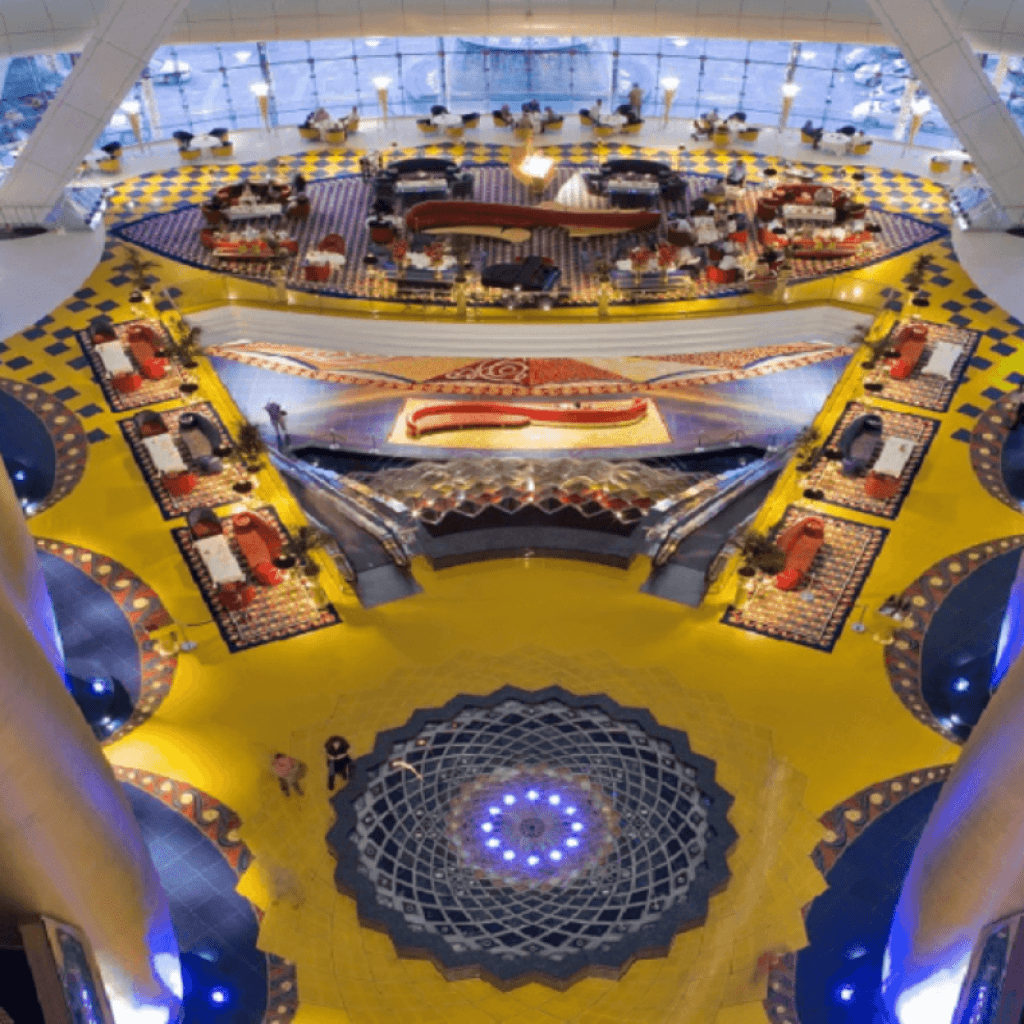
On the 1st level of the Sahn Eddar restaurant, there is a second exquisite 7-course afternoon tea. The exquisite hotel lobby's gorgeous mosaics, marble floor, fountains, and candles create an alluringly attractive Middle Eastern ambiance. Pastries, cakes, and the best teas and coffees are all available.

The afternoon tea is available from 1:00 to 5:00 p.m. and costs 550 AED.

Then, at 7:00 p.m., Sahn Eddar hosts a three-course High Tea.

Throughout the day, "Sweet Indulgences" packages are available, which include a seasonal cake with mocktail or trademark gold cappuccino for 280 AED per person.

The Burj Al Arab Facts

This exquisite hotel has been classified as the World's only 7-star hotel due to its intricacy and affluent lifestyle. Here are some interesting facts about the Burj Al Arab that you should know.

  •  More than 60,000 cubic meters of concrete and 900 tonnes of steel were used to create the skyscraper, and the hotel's interior is composed of the best materials. For example, custom-made carpets and rugs from South Africa and India, marble from Brazil and Italy, and one-of-a-kind doors from Dubai. 
  • The interior of the building was decorated with 24-carat gold leaf. The gold leaf is estimated to be 1,790 meters in length.
  • Despite its size, the Burj Arab only has 28 double-story floors, each with more than 200 bedroom suites. The suites range in size from the lowest (169 square meters) to the biggest (300 square meters) (780 square meters). The Royal Suite with the largest space is reserved for a Maharaja. A movie room, two master baths, full-size Jacuzzis with five-head rain showers, and a library with an elegant majlis-style area are among the amenities. 
  • 142 one-bedroom deluxe rooms, 18 panoramic suites, 28 two-bedroom elegant suites, 4 Club suites, two presidential suites, and two royal suites are also available at the hotel.
  • The Atrium, which is bordered by golden columns and gives a pleasant, natural light, is located inside the hotel. A fountain in the Centre shoots water 42 meters into the air, creating a stunning sight that will leave your mouth open.
  • The Burj Al Arab has a one-of-a-kind waterfall that uses fiber optics and highly atomized water to create a kaleidoscopic effect. The Cascade Cascade is a beautifully designed waterfall with a well-choreographed movement that is both distinctive and entertaining to the inquiring mind.
  • On either side of the main hotel lobby, there are three aquariums. The aquarium is believed to have 50 different fish species in its tanks. These gorgeous creatures are really entertaining, so visitors may enjoy glancing at them.
  • The Junsui lounge's ceiling is covered with 29,000 Swarovski crystals arranged in the shape of a Milky Way galaxy.
  • The Al Muntaha Restaurant, which is located 200 meters above the Persian Gulf, will leave you speechless. The restaurant has a fantastic view over Dubai. It also features a panoramic elevator, which is really nice.
  • The Al Mahara Restaurant is located within the same hotel. The restaurant is extraordinarily opulent, including a 990,000-litre marine tank. Inside the aquarium is a female shark that has given birth for four years in a row (this has never been documented on sharks before).
  • The Talise Spa combines the highest level of perfection with the allure of a high-end lifestyle. The hotel has received the title of best luxury hotel spa every year since 2014. 
  • The Burj Al Arab is a symbol of Dubai's wonderful culture, having appeared in several films such as Mission: Impossible -Ghost. It is an incredibly beautiful hotel in both Dubai and the rest of the world.

Finally, did you know that the Burj Al Arab's terrace was carried from Finland to Dubai? This edifice was built on a cruise ship and then brought to Dubai in six sections, only to be put together in Dubai.

I hope this article was useful in helping you learn more about the Burj Al Arab. If you have any queries, please leave them in the comments section below!

Have a pleasant stay at Burj Al Arab.
Thank you for reading All UAE Tours Blog!

Related Articles

Mar 01, 2024

Burj Park Dubai

Burj Park Dubai is awe-inspiring from all around the world. An expert in Mexican figurative art, Jorge Marin, sculpted the Wings of Mexico sculpture for the park. The Burj Khalifa, the world's tallest building, is just one of a number of notable landmarks in Downtown Dubai. There is a vast green space called Burj Park nestled in the middle of all of these magnificent structures. For an evening stroll, the park features a man-made island with art installations and spacious walkways. BURJ PARK GENERAL INFORMATION Timing of Burj Park Dubai's Burj Park It is open to the public 24 hours a day. Location of Burj Park Dubai's Burj Park in Dubai, United Arab Emirates, at the Burj Khalifa Park. Contact of Burj Park Dubai's Burj Park Details of how to reach us are as follows: +971-4-567-2030 When and where is it? There's an easy route to get there from the Dubai Mall's fountain exit, which is near the Burj Khalifa and the Dubai Opera. Burj Khalifa/Dubai Mall is the nearest metro station to Burj Park. THINGS TO DO IN DUBAI'S BURJ PARK During the winter months, Downtown Dubai's Burj Park comes to life with food truck festivals, art soirees, and other events. The Burj Lake, also known as the Dubai Fountain Lake, is located at the base of the Burj Khalifa and may be reached via bridges from Downtown. If you want to catch a peek of the Dubai Fountain at night, this is a great place to do it. The running track at Burj Park is ideal for a morning jog. If you're in the Downtown area, check out this list of activities to do at Burj Park. CYCLING If cycling is on your list of things to do in Dubai, make a trip to Burj Park by Emaar Dubai. In the park, you may rent a bike and ride about on your own, thanks to the dedicated bicycle stands. The Byky street bike rental programme at Burj Park, run by Nextbike, is comparable to ones in other European cities like London. The Bykys at Burj Park Dubai can be rented at any time of day or night. If you're looking for the greatest way to see Downtown Dubai, the Burj Khalifa, Souk Al Bahar, and the Marina Walk, this is it. Cycling in Dubai is a healthy and inexpensive way to see the city's attractions. It costs AED 15 for 30 minutes and AED 80 for 24 hours to use a Byky bicycle. WINGS OF MEXICO The art in Dubai's Burj Park is awe-inspiring from all around the world. An expert in Mexican figurative art, Jorge Marin, sculpted the Wings of Mexico sculpture for the park. The sculpture is a metaphor for the many ways in which humans might engage and create. The Wings of Mexico is an ode to the human spirit, its aspirations and triumphs. In this sculpture, we see the human yearning to fly and explore the globe, experiencing both the joys and the sorrows that come with the journey. Permanent displays of the Wings of Mexico can be found in locations around the world, including Dubai and Los Angeles. It is without a doubt one of Dubai's most famous monuments. THE HIGHEST FOUNTAIN IN THE WORLD IS HERE FOR YOU TO SEE Burj Park Dubai is home to the world's tallest fountain, the Dubai Fountain. Burj Park's fountain show is a must-see experience. Two football fields' worth of water cascade from the towering fountain! The 30-acre Burj Lake, from which the grand fountain juts out, offers stunning vistas of Downtown Dubai. With a vast spectrum of music, from contemporary pop to old hits, the Dubai Fountain performs. An incredible 50-story building could be seen from the water's powerful nozzles, which shoot 22,000 gallons of water into the air in an impressive array of five different rings and two arcs. Visitors and locals alike enjoy the vibrant colour projections, making it a famous tourist attraction. INTERNATIONAL EVENTS IN BURJ PARK, DUBAI Events such as the Dubai Light Show, the Auto Show, and The Market OTB a pop-up market commemorating the Dubai Shopping Festival all take place at Burj Park. Riding on the DUBAI FOUNTAIN LAKE Taking a Lake Ride across the Burj Lake or the Dubai Fountain Lake is another awe-inspiring experience at the Burj Park. The Burj Khalifa and other famous buildings in Downtown Dubai can be seen from a conventional Abra. Afternoons and evenings: 5:45 pm to 11:30 pm. At 30 minutes prior to closing time, the final boat leaves. The cost of a ride on the Dubai Fountain Lake is AED 65 per person. THE BOARDWALK Burj Park Dubai's Dubai Fountain Boardwalk, the world's tallest floating platform, allows tourists to get up close and personal with Dubai's world-famous fountain show. The nearest position to the Dubai Fountain is just 9 metres away from the 272 metre boardwalk, which can be accessed from either Burj Park or the Fountain promenade. Become a part of the best water show on the planet. While 50 colour projectors provide a wide range of colours, the fountain uses over 6,600 WET super lights to generate an optical range of more than 1,000 altered water effects. Dubai Fountain beachfront gets a fresh look in the winter thanks to the Burj Park light show. VISIT THE DUBAI MALL There are plenty of things to see and do nearby after a leisurely stroll through Burj Park. The Dubai Mall, one of the city's most popular shopping destinations, should be your first trip. The Dubai Mall, one of the city's largest shopping centers, offers a wide variety of retail and leisure opportunities. There is something for everyone to buy at the Dubai Mall. When it comes to entertainment options, it doesn't let you down. Dubai Aquarium and Underwater Zoo, which features a stunning walk-through tunnel and thousands of aquatic species. The Olympic-sized ice rink in Dubai As a visitor to the Dubai Dino Park, you'll be taken back in time to prehistoric eras, when dinosaurs roamed Earth. A virtual reality park that brings you into the thrilling world of AR. The Reel Cinemas, one of the largest in the world, with 22 screens. BURJ PARK RESTAURANT OPTIONS Yeldizlar Dubai's Burj Park is home to Yeldizlar, a Turkish restaurant. This Lebanese restaurant is located in the city's Downtown area and serves up traditional cuisine. Daily 11:00 a.m.-2:00 a.m., seven days a week. AED 210 is the typical price for a couple. Downtown Dubai, Dubai, United Arab Emirates: Burj Plaza. +1-971-4-4470670 is the phone number. Vida Food Truck If you're in the mood for some fast food but don't have time to cook, Vida Food Truck is the answer. The burgers on the menu are a must-try. 11:00 a.m. to 11:00 p.m., seven days a week. AED 80 for a two-person meal. Outside Vida Downtown Dubai, Dubai's Downtown area. Contact: +971-4-428-6902. Conclusion Taking a stroll in Burj Park Dubai in Downtown Dubai is a great way to unwind. Visit whenever you choose; there is no admission charge. Entrance to the park may be restricted, however, if a special event is being held there. As one of the few pet-friendly parks in Dubai, you may see a few furry pals while out for a walk at this park. All regions of the emirate, including Downtown Dubai, contain top-notch parks. Everyone can find something to do in Dubai, a city that never sleeps and never rests. For those who follow the "work hard, party harder" credo, there are plenty of ways to unwind during a long weekend in Dubai.

Read Article
Burj Khalifa Essentials and Facts
Mar 01, 2024

Burj Khalifa Essentials and Facts

The Burj Khalifa is a skyscraper in Dubai, United Arab Emirates, that stands at a height of 830 meters. It is well-recognized as the world's tallest building and Dubai's most well-known tourist attraction. This page introduces some building facts as well as associated information. Appellation (Title) Burj Khalifa is Arabic for "Khalifa Tower." Formerly known as Burj Dubai or Dubai Tower, the name was changed to Burj Khalifa on January 4, 2010, when the tower formally opened. The word Khalifa is derived from the name of Sheikh Khalifa Bin Zayed Al Maktoum, the president of Abu Dhabi and the United Arab Emirates. Due to the onslaught of the Financial Crisis, the Burj Khalifa and other development projects in Dubai were once on the edge of being halted, and it was neighboring Abu Dhabi that was on the verge of being halted. The major reason for this is because of Abu Dhabi, which gave cash to Dubai during this tough time. Furthermore, the word Khalifa has a significant meaning in Islam; it refers to the Islamic world's top leader. Development The exterior of the structure was finished on October 1, 2009, after construction began in January 2004. The structure, which is part of the 2 km2 (490-acre) Downtown Dubai development at the 'First Interchange' along Sheikh Zayed Road, near Dubai's main business center, opened on January 4, 2010. Skidmore, Owings & Merrill of Chicago designed and engineered the tower, with Adrian Smith as chief architect and Bill Baker as the chief structural engineer. The major contractor was Samsung C&T of South Korea. Records The Burj Khalifa set several world records, including the following: 829.8 m (2,722 ft) Tallest extant structure (formerly KVLY-TV mast – 628.8 m or 2,063 ft) World's highest elevator installation (situated inside a rod at the very top of the building) 829.8 m (2,722 ft) Tallest freestanding structure (formerly CN Tower – 553.3 m or 1,815 ft) Tallest structure ever built: 829.8 m (2,722 ft) (before, the Warsaw radio mast, which stood at 646.38 m or 2,722 ft). Building with most floors: 163 (previously World Trade Centre – 110) Tallest skyscraper (to top of spire): 828 m (2,717 ft) (previously Taipei 101 – 509.2 m or 1,671 ft) World's highest restaurant (At.mosphere): 122nd floor at 442 m (1,450 ft) (previously 360, at a height of 350 m (1,148 ft) in CN Tower) The world's highest New Year's Eve fireworks show. The world's biggest light and sound extravaganza on a single structure Tallest skyscraper to top of antenna: 829.8 m (2,722 ft) (previously the Willis (formerly Sears) Tower – 527 m or 1,729 ft) Elevators with the world's longest trip distance: 504 m (1,654 ft) 606 m is the highest vertical concrete pumping (for a structure) (1,988 ft) The world's highest building with living quarters World's highest installation of an aluminum and glass façade: 512 m (1,680 ft) World's highest nightclub: 144th floor Elevation (Height) Burj Khalifa's architectural elevation is 828 meters (2717 feet), measured from the top of the spire, which is considered an architectural element of the tower. Before 2010, the Burj Khalifa's height was kept a secret to prevent it from being surpassed by possible competitors. Finally, the owner Emaar declared that the Burj Khalifa's standard height is 828 meters, with a total height of 829.8 meters (there's a 1.7 meter tiny needle above the top of the spire at 828 meters), making it the world's tallest skyscraper in all categories. Burj Khalifa has held the title of the World's Tallest Building for ten years, and it will continue to do so for another three to five years until either the Dubai Creek Tower or the Jeddah Tower exceeds it in 2022 or later. Level 154, which is 584 meters above ground, is the highest occupied floor. There are three observation decks for public viewing, located on levels 124, 125, and 148, respectively. With a height of 555 meters, the one on level 148 is now the world's highest observation deck. Locality Burj Khalifa's address is 1 Sheikh Mohammed bin Rashid Boulevard, Dubai, United Arab Emirates; the tower is located in Downtown Dubai, an area along Sheikh Zayed Road; it's one of several districts in the city filled with high-rise buildings; another district with a significant amount of skyscrapers is Dubai Marina; the two districts are about 11 miles apart. Burj Khalifa is 2.1 miles from the sea, thus the natural vista around the tower is not as appealing as Dubai Marina's, but there are numerous man-built lakes and rivers around the tower, which have made up for the deficit to some extent. Customs (Uses) The mixed-use skyscraper serves a range of functions, including office, residential, hotels, restaurants, observation, and communication. Armani uses the 39th floor, or level 39, and the floors below as hotels or homes; the floors from level 39 to 108 are primarily utilized for housing. Except levels 124,125, and 148, which are three distinct observation decks for public viewing, all of the levels above 108 to 154 are office spaces. At.mosphere, a restaurant on level 122, is another option. All mechanical floors are located above levels 154 to 163. There are a total of 2909 stairs from the ground floor to the 160th story, making it the tallest building in the world. The number of floors of the Burj Khalifa is widely recognized as 163, but a 2717-foot skyscraper couldn't possibly have just 163 levels, right? That's because the floors above level 163 and below the spire serve as the spire's base construction, which isn't livable and isn't used for mechanical purposes, the building now has a total of 209 stories after rising 46 stories. Burj Khalifa Features The Dubai Fountain Outside, WET Enterprises developed a Dh 800 million (US$217 million) fountain system. It is 270 meters (900 feet) long and sprays water 150 meters (500 feet) into the air, with 6,600 lights and 50 colored projectors. It is accompanied by a variety of classical to modern Arabic and other music. It is the biggest choreographed fountain in the world. Emaar announced on October 26, 2008, that the Dubai Fountain would be named after the winner of a naming contest. Observation deck On the 124th level, At the Top, an outdoor observation deck opened on January 5, 2010. When it first opened, it was the world's tallest outdoor observation deck, standing at 452 meters (1,483 feet). Although Cloud Top 488 on the Canton Tower in Guangzhou at 488 m (1,601 ft) surpassed it in December 2011, Burj Khalifa reclaimed the title of the world's highest observation deck on October 15, 2014, when it opened the 148th-floor SKY level at 555 m (1,821 ft), until the Shanghai Tower opened in June 2016 with an observation deck at a height of 561 m. The electronic telescope, an augmented reality device developed by Gsmprjct° of Montréal, is located on the 124th-floor observation deck and allows visitors to view the surrounding landscape in real-time as well as view previously saved images such as those taken at different times of the day or in different weather conditions. To alleviate the daily flow of tourists, management enables visitors to purchase tickets in advance for a certain date and time at a 75 percent discount off the price of tickets purchased on the spot. After power outages led an elevator to become stuck between floors, trapping a group of visitors for 45 minutes, the observation deck was closed to the public for two months on February 8, 2010. People can view the Iranian beaches from the top of the tower when the tide is low and visibility is good. Burj Khalifa Park The Burj Khalifa is surrounded by an 11-hectare (27-acre) park designed by SWA Group. The park's design, like the tower, was inspired by the Hymenocallis flower, a desert plant. The water room, which consists of a series of pools and water jet fountains, is located in the heart of the park. Images of the Burj Khalifa with the Hymenocallis flower can be found on benches and signage. Irrigation collected from the building's cooling system is used to water the plants. Annually, the system produces 68,000,000 L (15,000,000 imp gal). The park's six water elements were designed by WET Enterprises, the same company that created the Dubai Fountain. Burj Khalifa Tickets Cost in 2021 The cost of Burj Khalifa tickets varies depending on when you visit. The figures shown here are the initial costs. Prices may be higher during busy hours (particularly after sunset). The rates shown below are from the official website; however, numerous other websites provide discounts regularly. Tickets for "At the Top" level of the Burj Khalifa - floors 124 and 125 General entrance fee With this self-guided tour, you may take in panoramic views from floors 125 and 124 at your leisure. Ticket for non-prime hours (from 9 a.m. to 3:30 p.m. and from 6:30 p.m. to closing): Adult (12 years and above) - Tickets start at 154 AED (about 42 USD or 3,060 INR) Child (4-12 years) - Tickets start at 119 AED (about 33 USD or 2,365 INR) FREE for children under the age of four. Primary hours ticket (from 4 pm to 6 pm) Adult (12 years and above) - Tickets start at 229 AED (about 63 USD or 4,550 INR) child (4-12 years) - Tickets start at 137 AED (about 38 USD or 2,722 INR) FREE for children under the age of four. Fast track entry With this Burj Khalifa ticket, you may avoid the lengthy ticket lines and go right to the elevators that will whisk you to the 124th and 125th floors. Ticket prices are as follows: Adults (12 years and older): 323 AED (88 USD) At the Top Along With Armani Deli Combine an At the Top tour with a three-course set lunch at Dubai's first Armani Hotel. The cost of a ticket is 309 AED (84 USD) At the Top + Rooftop, The Burj Club Complement your trip to the top with a 3-course set dinner at the Rooftop, of The Burj Club, which offers outdoor dining with views of the Dubai Fountain and the Burj Khalifa. The cost of a ticket is 284 AED (78 USD) Burj Khalifa tickets – floor 148 (At the Top Sky) At the Top Sky At Burj Khalifa's Level 148, see the world's tallest observation deck with an outdoor patio. For complimentary beverages, be led to the SKY lounge. Tickets for non-prime hours (from 7 p.m. until closing): Adult (12 years and older) - Ticket prices start at 364 AED (99 USD or 7,232 INR) Child (4-12 years): Tickets start at 364 AED (99 USD or 7,232 INR)  Free for children under the age of four. Ticket for prime hours (from 9:30 a.m. to 6 p.m.): Adult (12 years and older) - Ticket prices start at 464 AED (127 USD or 9,220 INR)  Ticket pricing for a child (4-12 years) starts at 464 AED (127 USD or 9,220 INR) Free for children under the age of four. VIP Lounge – Floor 154 The VIP Lounge is on the top floor of the Burj Khalifa and is open to the public. Only at 4 p.m., during twilight hours, is access to the VIP Lounge permit The cost of a ticket for an adult or a kid is 754 AED per person (about 205 USD or 15,000 INR). If you genuinely want to have a once-in-a-lifetime experience in Dubai, make sure to go up the Burj Khalifa. Tickets are available for purchase online or at the box office (note that buying the tickets at the entrance is more expensive). If you genuinely want to have a once-in-a-lifetime experience in Dubai, make sure to go up the Burj Khalifa. Tickets are available for purchase online or at the box office (note that buying the tickets at the entrance is more expensive). Burj Khalifa's opening hours The Burj Khalifa is open from 8.30 a.m. to 10 p.m. every day. Sunrise tours are available at 5.30 a.m. on Friday and Saturday. Please keep in mind that ticket costs change based on when you visit and whatever experience you choose, such as the At the Top or the Sky deluxe lounge. Places to Visit around Burj Khalifa Dubai Aquarium & Underwater Zoo The world-class Dubai Aquarium & Underwater Zoo, with hundreds of aquatic species and a 270-degree walkthrough tunnel, is located in the Dubai Mall. The aquarium is home to the world's largest acrylic panel, which was officially recognized by the Guinness Book of World Records. Piranha, penguins, crocodiles, lizards, snakes, otters, and eels are among the animals housed in the approximately 40 exhibits. You may go cage diving with sharks or take a ride on a glass-bottom boat to see over 33,000 aquatic creatures. Tickets for the Dubai Aquarium are available online or at the mall's ticket counter. A single entrance is allowed per ticket. Visitors are welcome to spend as much time as they like here. Visitors who come frequently can purchase a membership card to have access to exclusive benefits. Seven days a week, the Dubai Aquarium and Underwater Zoo are open. The hours of operation are 10 a.m. to 10 p.m. Sunday through Wednesday, and 10 a.m. to midnight Thursday through Saturday. Next to the mall is the Rainforest Café, which is a fantastic location to eat with kids. The rainforest-themed café includes life-size replicas of giraffes, gorillas, and crocodiles set in a replica of the rainforest. The aquarium tank is also visible. MAD Gallery The MAD Gallery is located in the brand-new Fashion Avenue, a premium shopping district. It contains several lovely artworks and art galleries, as well as 150 international high-end companies. The MAD gallery, located adjacent to Dior on the first level of Fashion Avenue, is unique. The MB&F M.A.D. The gallery is a fascinating kinetic art realm where Horological Machines and Mechanical Art Devices rule supreme. They are owned by Maximilian Busser, the creator of the MB&F watch company. He chooses all of the items on exhibit, including those made under his label. Not only will you find the full range of MB&F Horological Machines and Legacy Machines inside the galleries, but you'll also have the pleasure of discovering carefully curated pieces – or, as we like to call them, Mechanical Art Devices from all over the world – each one making your heart beat a little faster. Dubai Fountain The Dubai Fountain, the world's highest-performing fountain, is a fascinating water, music, and light display in Downtown Dubai. The Dubai Fountain, which spans over 900 feet and is the length of two football fields, is located on the 30-acre Burj Lake and features a variety of musical performances. The fountain dances to a variety of melodies ranging from classical to modern Arabic and global music. Michael Jackson's Thriller, Andrea Bocelli and Sarah Brightman's Time to Say Goodbye, and Korean pop band EXO's Power are all popular songs. The one-of-a-kind design has five rings of jets that spray water to dizzying heights visible from almost 30 kilometers away. The show is a visual marvel, with thousands of WET super lights and over 20 color projectors. The laser beam may be seen from 32 kilometers away. If standing to the side of the fountain isn't close enough, the Dubai Fountain Lake Ride may get you even closer. You can also sail on a traditional Abra on the Burj Lake for the finest display of the fountains, or take the boardwalk for AED 20 for the best view of the fountains. The fountains are only 9 meters distant from the nearest point. Every day at 1.30 p.m., the fountain begins to run at half-hour intervals until 6 p.m., when it stops. Performances are free and may be watched in a variety of places across Downtown Dubai. The seaside promenade immediately outside the Dubai Mall is the most popular spot. Thousands of people stream out of the mall just before each show, making the area very congested. The stroll through Souk Al Bahar is much less congested and provides a more enjoyable viewing experience. At a busy hour, spectators leaving the Dubai Mall will need to set aside about 15 minutes to secure a place. Souk al Bahar Souk Al Bahar, the "sailor's market," is a trip back in time to the wonder and enchantment of old Arabia, blending the traditional with the contemporary. It is enchantingly Arabesque - a vibrant marketplace that gives the city's residents and tourists alike an exciting experience of shopping, entertainment, and dining in interesting contrast to The Dubai Mall – and is located in Downtown Dubai's pulsating core. It has approximately 100 stores, including 22 restaurants, cafés, and lounges, the majority of which are located on the waterfront promenade on the outskirts of Burj Lake. Souk al Bahar is home to some of Dubai's top restaurants, as well as some unusual eateries serving a wide range of cuisines. Thai cuisine is served at Mango Tree, British cuisine is served at Rivington Grill, and Cuban cuisine is served at Café Habana, as well as the Time Out Dubai Restaurant Award winner Baker & Spice. The outdoor dining restaurants provide the finest views of the Burj Khalifa and the Dubai Fountain, which is undoubtedly one of the world's most photographed places. Public Outdoor Art Work Beautiful public art may also be seen in the heart of Downtown Dubai, near the Souk Al Bahar and the Dubai Fountains. Donald Greig's Camels is a collection of three life-size sculptures of modest creatures. Camels are a real Arabian Gulf emblem. A standing camel, a sitting camel, and a camel calf make up the trio. Greig is known for his wildlife sculptures, and he produced Camels after spending hours watching and riding camels. The sculptures were then melted down into silicone before being molded in wax. They were then dipped in 15 layers of ceramic before being completed with molten bronze. The tallest camel is 3 meters tall, and all three weigh around 800 kilos. Dubai Opera building The Dubai Opera House may also be seen from the Burj Plaza. It is Dubai's gleaming Centre of culture and the sparkling gem of The Opera District. The construction is primarily made of glass, with a translucent entryway and a 'box inside a box' sense to allow light to flow in. The main chandelier at the Dubai Opera weighs 5000kg and includes 2900 LEDs, while the building has 600 lighting fixtures. While the opera house's dhow-inspired design pays homage to the region's nautical history, the interior's utilitarian features are very much of the era. The internal space's functional configuration ranges from a concert hall setting for 1,901 people to a theatre setting for 1,875 people, thanks to cutting-edge hydraulic technology, moving floor plates, and a series of overhead reflectors; box seating provides additional space. The building's "flat floor" mode allows it to accommodate a broad range of events, including weddings, trade fairs, exhibitions, and banquets for up to 1,000 people. The Lounge- Burj Khalifa The Burj Khalifa Lounge will be open every day from the 152nd to 154th floors of the world's tallest structure. With a height of 575 meters, you'll need a head for heights to make a date here, but if you want a bird's eye view of the city, you've come to the perfect place. On the 152nd story, there's even an outside patio with glass walls for a spectacular view. Every day from 12.30 p.m. to 4 p.m., the Lounge Burj Khalifa will offer afternoon tea, sunset drinks, and canapés from 5.30 p.m. to 7 p.m., and evening drinks from 7.30 p.m. to midnight. Convenient guidelines The greatest time to visit At the Top is during the sunset hours when the sky is bathed in an amber hue. The sunset hours of 4:30 p.m. to 6:00 p.m. provide the finest opportunity to see the Dubai skyline in the evening!  Allow plenty of time to watch the sunset from the Burj Khalifa - security checks are required, and this is the busiest time of day. You may access "At The Top" during peak hours and spend as much time as you like up there. Aside from the difference in height, the primary distinction between the two floors is that SKY is quieter and features soft sitting everywhere. It's better to reserve ahead of time to guarantee you get the greatest time, and if you want to see the sunset, book at least 90 minutes in advance to get the most out of it. Don't forget that you may visit on Fridays and Saturdays as well. To get your tickets, scan your QR code at any of the kiosk offices around the Dubai Mall. You may also get them at the Burj Khalifa's entry, which is located on the Lower Ground Floor of the Dubai Mall. I hope this article was useful in helping you learn more about the Burj Khalifa tickets. If you have any queries, please leave them in the comments section below!

Read Article
United Arab Emirates | Geography, History, Finance & More
Mar 01, 2024

United Arab Emirates | Geography, History, Finance & More

The United Arab Emirates (UAE) is a federation of seven emirates located on the southeastern coast of the Arabian Peninsula. Known for its modern cities, distinctive architecture, desert landscapes, cultural heritage, international business centers, and world-class tourism, the UAE has developed into one of the Middle East's most important economic and travel destinations.The country combines a rich history with rapid modernization. From traditional fishing and pearling communities to global cities such as Dubai and Abu Dhabi, the UAE has experienced remarkable economic and social transformation since the federation was established in 1971.Whether you are planning a UAE holiday, researching the country's geography and history, or looking to understand its economy, government, culture, and tourism industry, this guide provides an overview of the United Arab Emirates.United Arab Emirates at a GlanceFactInformationOfficial NameUnited Arab EmiratesCapitalAbu DhabiNumber of Emirates7LocationSoutheastern Arabian PeninsulaOfficial LanguageArabicCurrencyUAE Dirham (AED)Political SystemConstitutional federationFederation Established2 December 1971AreaApproximately 83,600 km²ClimateDesert climateHighest PointJebel Jais, 1,934 metresTime ZoneUTC+4Currency PegAED 3.6725 = USD 1The UAE Government identifies Abu Dhabi as the federal capital and confirms that the country is a constitutional federation of seven emirates. The UAE dirham is officially abbreviated as AED and is pegged to the US dollar at AED 3.6725 per US dollar.Where Is the United Arab Emirates?The United Arab Emirates is located in Western Asia on the southeastern coast of the Arabian Peninsula.The country overlooks the Arabian Gulf and shares land borders with:Saudi Arabia to the west and southOman to the southeastIts geographical position has historically been important for trade between the Arabian Peninsula, the Gulf region, South Asia, East Africa, and other international markets.Geography of the UAEThe UAE has a diverse landscape despite its predominantly desert environment.Its geography includes:Vast desert areasSandy dunesCoastal plainsBeachesIslandsMountain rangesOasesSalt flats and wetlandsUrban areasThe country's eastern landscape becomes more mountainous, particularly around Fujairah and Ras Al Khaimah.Mountains in the UAEThe Hajar Mountains extend through the eastern part of the country and create some of the UAE's most dramatic scenery.The highest natural point in the UAE is Jebel Jais, located in Ras Al Khaimah, with an elevation of approximately 1,934 metres.CoastlineThe UAE has an extensive coastline along the Arabian Gulf, while Fujairah provides access to the Gulf of Oman on the country's eastern side.Coastal geography has played an important role in the UAE's history, particularly in fishing, pearling, maritime trade, and modern port development.The Seven Emirates of the UAEThe United Arab Emirates consists of seven emirates:Abu DhabiDubaiSharjahAjmanUmm Al QuwainRas Al KhaimahFujairahEach emirate has its own local government and distinctive geography, culture, economy, and attractions.Abu DhabiAbu Dhabi is the capital of the UAE and the largest emirate by area.It is the country's federal government center and is also a major energy, financial, cultural, and tourism destination. Abu Dhabi contains extensive coastline and more than 200 natural islands.Popular attractions include:Sheikh Zayed Grand MosqueLouvre Abu DhabiQasr Al WatanYas IslandSaadiyat IslandAbu Dhabi CornicheDesert landscapesDubaiDubai is one of the world's best-known tourism and business destinations.The emirate is famous for its modern skyline, shopping, entertainment, beaches, luxury hotels, business districts, and desert experiences.Popular attractions include:Burj KhalifaDubai MallPalm JumeirahDubai MarinaDubai CreekMuseum of the FutureDubai Desert SafariGlobal VillageSharjahSharjah is known for its museums, cultural institutions, heritage areas, family attractions, and traditional architecture.The emirate has been recognized for its emphasis on culture and heritage and offers travelers a different experience from the modern commercial atmosphere associated with Dubai.AjmanAjman is the smallest of the seven emirates by area.It offers beaches, a growing urban environment, traditional heritage sites, and a more compact destination experience.Umm Al QuwainUmm Al Quwain is one of the smaller and less densely populated emirates.It is known for its coastal environment, traditional activities, mangroves, and quieter atmosphere compared with Dubai and Abu Dhabi.Ras Al KhaimahRas Al Khaimah, often abbreviated as RAK, is known for its mountains, beaches, desert landscapes, heritage attractions, and outdoor adventures.Jebel Jais is one of its major natural attractions and is the highest mountain in the UAE.FujairahFujairah is located on the UAE's eastern coast and is the only emirate situated completely along the Gulf of Oman.Its landscape combines mountains, beaches, valleys, and coastal communities, making it particularly popular for outdoor and water-based experiences.History of the United Arab EmiratesThe history of the UAE extends thousands of years before the modern federation was created.Archaeological evidence indicates that people lived in the region as far back as approximately 6000 BC. Ancient communities depended on fishing, hunting, agriculture, animal grazing, and trade.Ancient UAEArchaeological discoveries across Abu Dhabi, Sharjah, Umm Al Quwain, and Ras Al Khaimah provide evidence of early settlements and pottery traditions.The Bronze Age included important archaeological periods such as:Jebel Hafeet periodUmm Al Nar periodWadi Suq periodThe region later developed sophisticated agricultural systems, including falaj irrigation, which helped communities cultivate land in a dry environment.Arrival of IslamIslam reached the region during the 7th century.According to the UAE Government's historical account, envoys associated with the Prophet Muhammad arrived in the region around AD 630, beginning a new period in the area's history.Maritime Trade and European InfluenceThe UAE's location along major maritime routes made the region important for trade.Portuguese influence expanded into the Arabian Gulf from the late 15th century, followed by changing European commercial and political interests.During the 18th and 19th centuries, British involvement in the Gulf increased. Agreements were eventually established with the sheikhs of the Trucial States.Formation of the United Arab EmiratesThe modern UAE was established as a federation in 1971.The formation of the country was driven by efforts to unite the emirates into a federation and establish a sovereign state.On 2 December 1971, six emirates formed the United Arab Emirates:Abu DhabiDubaiSharjahAjmanUmm Al QuwainFujairahRas Al Khaimah joined the federation in February 1972.Sheikh Zayed bin Sultan Al Nahyan became the UAE's first President and is widely regarded as the founding father of the federation.Government and Political SystemThe UAE is a constitutional federation consisting of seven emirates.The federal system includes five main federal authorities:The Federal Supreme CouncilThe President and Vice-PresidentThe CabinetThe Federal National CouncilThe Federal JudiciaryLocal governments also operate within each emirate.President of the UAEThe current President of the United Arab Emirates is Sheikh Mohamed bin Zayed Al Nahyan, who also serves as Ruler of Abu Dhabi. He assumed the presidency in May 2022.UAE Economy and FinanceThe UAE has developed from an economy heavily associated with oil and gas into a diversified economy with major activity across numerous sectors.The country's strategic location, financial reserves, sovereign wealth funds, investment environment, free zones, infrastructure, and economic diversification policies all contribute to its economic position.Major Economic SectorsImportant sectors include:Oil and gasTourism and hospitalityReal estateFinancial servicesInternational tradeLogisticsAviationConstructionManufacturingTechnologyRenewable energyHealthcareProfessional servicesOil and GasOil and gas played a major role in the UAE's economic development, particularly in Abu Dhabi.Energy revenues helped finance infrastructure, education, healthcare, transportation, and large-scale national development.At the same time, the UAE has pursued economic diversification to develop industries beyond hydrocarbons.Non-Oil EconomyNon-oil sectors have become increasingly important to the UAE economy.According to UAE Government data, the country's 2023 GDP at current prices was approximately AED 1.88 trillion, while non-oil GDP at current prices reached approximately AED 1.43 trillion.This diversification includes tourism, trade, financial services, logistics, technology, manufacturing, real estate, and other industries.UAE Currency and FinanceThe official currency is the UAE dirham, abbreviated as AED.One dirham is divided into 100 fils.The UAE Government states that the dirham has been pegged to the US dollar since 2002 at:US$1 = AED 3.6725UAE as a Financial CenterDubai and Abu Dhabi have developed into major financial and business centers.The country's financial ecosystem includes commercial banks, investment companies, insurance providers, capital markets, free zones, and specialized financial centers.Abu Dhabi is also developing its position as an international financial and innovation hub.UAE Trade and BusinessThe UAE's location between major markets in Asia, Europe, Africa, and the Middle East has helped it develop into an important trading and logistics hub.The country has major ports, airports, free zones, logistics networks, and business centers that support international trade.UAE Government figures show that non-oil foreign trade reached approximately AED 2.233 trillion in 2022, including imports, non-oil exports, and re-exports.Population and DiversityThe UAE has a highly international population.Alongside Emirati citizens, the country is home to large expatriate communities from Asia, Europe, Africa, and other parts of the world.This international population contributes to the UAE's multicultural environment and means that many languages are commonly heard throughout the country.Arabic is the official language, while English is widely used in business, tourism, education, transportation, and everyday communication.Language in the UAEArabic is the official language of the United Arab Emirates.English is widely spoken and understood, especially in major tourist destinations and business environments.Other languages commonly spoken by residents include:HindiUrduMalayalamBengaliFarsiTurkishFrenchRussianChineseRoad signs and many commercial signs are commonly displayed in both Arabic and English.Religion and CultureIslam is the official religion of the UAE.Emirati culture reflects traditional Arab and Islamic values while also incorporating influences from the country's diverse international population.Visitors can experience Emirati heritage through:Traditional architectureArabic hospitalityEmirati cuisineSouksMuseumsHeritage villagesTraditional craftsCultural festivalsDesert experiencesFalconryTraditional music and danceThe UAE also promotes a policy of tolerance and coexistence among different communities.UAE ClimateThe UAE has a predominantly desert climate.Summers are generally very hot and can be humid, particularly along the coast. Winters are milder and are generally more comfortable for outdoor activities.Mountainous areas in the eastern part of the country can experience cooler conditions than the coastal and desert regions.Best Time to Visit the UAEFor many travelers, the cooler period from approximately November through March is among the most comfortable times for sightseeing and outdoor activities.This period is particularly suitable for:Desert safarisBeach activitiesCity toursOutdoor attractionsHikingHeritage explorationOutdoor diningSummer can still be a good time to visit for travelers who prefer indoor attractions, shopping, hotels, museums, and air-conditioned entertainment.Tourism in the United Arab EmiratesTourism is one of the UAE's most important non-oil industries.The country offers a combination of modern attractions and traditional experiences, allowing travelers to move between skyscrapers, beaches, deserts, mountains, cultural districts, and historic sites within the same trip.Popular UAE Travel ExperiencesVisitors can enjoy:Dubai city toursAbu Dhabi sightseeingDesert safarisDune bashingCamel ridesSandboardingBeach holidaysWater sportsCultural toursHeritage experiencesLuxury resortsShoppingTheme parksWildlife and nature experiencesMountain adventuresWhy Is the UAE Popular With Tourists?The UAE has become a major international tourism destination because of its combination of infrastructure, accessibility, attractions, hospitality, entertainment, and diverse landscapes.Travelers can experience a modern city environment in Dubai, cultural and architectural attractions in Abu Dhabi and Sharjah, mountain adventures in Ras Al Khaimah and Fujairah, and quieter coastal experiences in the northern emirates.Famous Places to Visit in the UAESome of the country's best-known attractions include:DubaiBurj KhalifaDubai MallPalm JumeirahDubai MarinaDubai CreekMuseum of the FutureDubai Miracle GardenGlobal VillageDubai Desert SafariAbu DhabiSheikh Zayed Grand MosqueLouvre Abu DhabiQasr Al WatanYas IslandFerrari World Abu DhabiSaadiyat IslandSharjahHeart of SharjahSharjah Museum of Islamic CivilizationAl Noor IslandAl Majaz WaterfrontRas Al KhaimahJebel JaisRas Al Khaimah beachesWadi and mountain landscapesHeritage attractionsFujairahFujairah beachesAl Bidyah MosqueHajar Mountain landscapesDiving and snorkeling locationsUAE TransportationThe UAE has an extensive modern transportation network.Travelers can use:Metro systemsTaxisBusesRental carsPrivate transfersDomestic and international flightsDubai Metro is particularly useful for traveling between major areas of Dubai, while taxis and private vehicles provide access to destinations outside metro routes.The country's international airports also connect the UAE with destinations throughout the Middle East, Asia, Europe, Africa, and beyond.UAE Time ZoneThe United Arab Emirates operates on Gulf Standard Time (GST), UTC+4.The country does not currently observe seasonal daylight-saving time.UAE FlagThe UAE flag consists of four colors:RedGreenWhiteBlackThe colors are arranged with a vertical red section along the flagpole and three horizontal bands of green, white, and black.The colors are associated with different historical and symbolic interpretations connected with Arab identity, values, strength, peace, and prosperity.UAE National DayThe UAE celebrates its national day on 2 December each year.The date marks the establishment of the federation in 1971 and is an important national celebration throughout the seven emirates.Festivities commonly include:FireworksCultural performancesDecorationsFamily eventsConcertsPublic celebrationsIs the UAE Worth Visiting?The UAE is an excellent destination for travelers looking for a combination of modern attractions, culture, adventure, beaches, desert landscapes, shopping, food, and luxury experiences.One of its biggest advantages is the variety available across the seven emirates. A trip can combine Dubai's modern skyline, Abu Dhabi's cultural attractions, Sharjah's heritage, Ras Al Khaimah's mountains, Fujairah's coastline, and the quieter environments of Ajman and Umm Al Quwain.Frequently Asked Questions About the United Arab EmiratesWhat is the United Arab Emirates?The United Arab Emirates is a federation of seven emirates located on the southeastern Arabian Peninsula. The seven emirates are Abu Dhabi, Dubai, Sharjah, Ajman, Umm Al Quwain, Ras Al Khaimah, and Fujairah.What is the capital of the UAE?Abu Dhabi is the federal capital of the United Arab Emirates. It is also the largest emirate by area.How many emirates are there in the UAE?There are seven emirates: Abu Dhabi, Dubai, Sharjah, Ajman, Umm Al Quwain, Ras Al Khaimah, and Fujairah.When was the UAE founded?The United Arab Emirates was established on 2 December 1971 when six emirates formed the federation. Ras Al Khaimah joined in February 1972.What is the currency of the UAE?The official currency is the UAE dirham (AED). The dirham is pegged to the US dollar at AED 3.6725 per US dollar.What language is spoken in the UAE?Arabic is the official language. English is widely spoken, particularly in tourism, business, education, and major cities.What is the UAE famous for?The UAE is famous for its modern cities, skyscrapers, luxury tourism, shopping, desert landscapes, beaches, cultural attractions, business centers, and diverse international communities.What is the UAE economy based on?The UAE economy includes oil and gas as well as major non-oil sectors such as tourism, trade, finance, logistics, real estate, manufacturing, technology, and professional services.What is the climate like in the UAE?The UAE has a desert climate. Summers are generally very hot and humid, while winters are considerably more comfortable for outdoor activities. Mountain areas can be cooler.What is the highest mountain in the UAE?Jebel Jais in Ras Al Khaimah is the highest point in the UAE, reaching approximately 1,934 metres above sea level.What are the best places to visit in the UAE?Popular destinations include Dubai, Abu Dhabi, Sharjah, Ras Al Khaimah, and Fujairah. Each emirate offers different attractions, landscapes, cultural experiences, and activities.Explore the United Arab Emirates With All UAE ToursThe UAE is much more than Dubai. Across its seven emirates, travelers can discover deserts, beaches, mountains, heritage sites, cultural attractions, modern architecture, family entertainment, and unforgettable adventures.Whether you want to experience a Dubai desert safari, Abu Dhabi sightseeing tour, mountain adventure in Ras Al Khaimah, cultural attractions in Sharjah, or coastal experiences in Fujairah, explore the UAE with All UAE Tours and discover experiences across the Emirates.

Read Article
Tips for Sleeping in Your Car
Mar 01, 2024

Tips for Sleeping in Your Car

Sleeping in your car can be a useful option during a road trip, when accommodation is unavailable, or when you need a short place to rest between destinations. With the right preparation, you can make the experience considerably safer and more comfortable.However, sleeping in a vehicle requires more planning than simply reclining the seat and going to sleep. Where you park, the weather, ventilation, security, temperature and local laws all matter.This guide explains practical tips for sleeping in your car, what to bring, where to park, how to stay comfortable and what mistakes to avoid.Is It Safe to Sleep in Your Car?Sleeping in a car can be reasonably safe when you choose an appropriate location and prepare properly, but conditions vary considerably.Before settling down for the night, consider:Whether overnight parking is permittedHow secure the area isWeather and temperatureVentilationYour access to water and restroomsWhether the vehicle is parked legallyYour ability to leave quickly if conditions changeNever assume that a parking lot, roadside area or public space allows overnight sleeping. Rules can vary by city, property owner and country.1. Choose a Safe Place to ParkWhere you sleep is one of the most important decisions.Look for a location that is:Legally accessible for overnight parkingWell-lit without being directly under bright lightsAway from moving trafficRelatively quietOn stable, level groundAway from flood-prone areasAccessible to emergency servicesAppropriate for overnight staysAvoid isolated locations where you cannot easily leave or areas with obvious safety hazards.If you are traveling, check local regulations and signs before parking overnight.2. Check Local Laws and Parking RulesOne of the biggest mistakes people make is assuming that sleeping in a parked car is legal everywhere.There may be separate rules concerning:Overnight parkingCampingSleeping in vehiclesParking on private propertyParking in public spacesVehicle habitationA location may allow parking but prohibit overnight sleeping or camping.Check local government guidance, parking signs and property rules before spending the night.3. Park on Level GroundA relatively level parking position makes sleeping much more comfortable.Before turning in:Park securely.Engage the parking brake.Turn off the engine.Check that the vehicle is stable.Make sure you are not blocking traffic or access points.Avoid parking where there is a significant risk of water accumulation, falling objects, unstable ground or other environmental hazards.4. Keep the Car VentilatedVentilation is important for comfort and condensation control.A completely sealed vehicle can become stuffy, particularly when several people are inside.Depending on local weather and security conditions, you can use the vehicle's ventilation system while awake and before sleeping. If you choose to leave a window slightly open, consider insects, rain, temperature and security.Never sleep with the engine running in an enclosed or poorly ventilated location.Carbon monoxide is an invisible, odorless and potentially fatal gas. Never run the engine inside a garage or other enclosed space.5. Don't Sleep With the Engine RunningLeaving the engine running while you sleep creates unnecessary risks.Carbon monoxide can enter the passenger compartment if there is an exhaust problem or if the vehicle is positioned in a hazardous location.The safest approach is to turn the engine off before going to sleep and choose appropriate conditions for the night.If you need heating or cooling, plan your sleeping location and equipment around the weather rather than relying on an idling engine.6. Prepare the Back Seat or Cargo AreaIf your vehicle allows it, creating a flat sleeping surface can dramatically improve comfort.You can use:A sleeping padFoldable mattressCamping matBlanketsSleeping bagPillowSmall cushionsMove unnecessary luggage to the front seats or another secure area.Try to remove hard or uneven objects from underneath your sleeping area.7. Use a Sleeping Bag or Appropriate BeddingYour bedding should match the expected temperature.For cooler conditions, a sleeping bag or warm blanket can help retain body heat.For warmer weather, lightweight sheets and breathable fabrics are generally more comfortable.Avoid relying solely on heavy blankets in hot weather, because overheating can become a serious problem.8. Control the TemperatureTemperature is one of the biggest challenges when sleeping in a vehicle.In Cold WeatherConsider:An insulated sleeping padAppropriate sleeping bagWarm clothingSocksA hatExtra blanketsKeep emergency supplies available if traveling through particularly cold areas.In Hot WeatherHeat can become dangerous inside a parked vehicle.A car can heat up rapidly in warm conditions, even when the outside temperature does not initially seem extreme.If conditions are too hot for safe sleeping, find a cooler and appropriate alternative rather than trying to endure the heat inside the vehicle.9. Block Out LightStreetlights, headlights and early morning sunlight can make sleeping difficult.Useful options include:Window shadesReflective sunshadesCurtains designed for vehiclesAn eye maskAvoid creating an arrangement that completely prevents you from seeing outside when you need to leave.10. Reduce NoiseRoad traffic, people and nearby businesses can make sleeping difficult.Consider bringing:EarplugsComfortable headphonesWhite-noise equipmentHowever, avoid blocking out environmental sounds completely if you need to remain aware of what is happening around the vehicle.11. Keep Valuables Out of SightDo not leave expensive items visible through the windows.Before sleeping:Put electronics away.Store luggage out of sight.Lock the doors.Close windows appropriately.Keep your keys accessible.Avoid displaying valuable equipment.A simple, uncluttered vehicle is less conspicuous and can reduce opportunities for theft.12. Keep Your Phone ChargedYour phone can be important during an overnight road trip.Before going to sleep, make sure you have:A charged phoneCharging cablePower bankEmergency contactsNavigation accessImportant travel informationKeep your phone somewhere accessible rather than buried inside luggage.13. Keep Water NearbyHave drinking water within easy reach.A reusable water bottle is convenient, particularly if you are traveling long distances.You should also plan ahead for restroom access. A location that seems convenient at night may have no facilities available in the morning.14. Keep the Interior OrganizedA small vehicle can quickly become uncomfortable when luggage is scattered everywhere.Before sleeping, create separate areas for:Sleeping equipmentClothesFoodElectronicsEmergency suppliesPersonal itemsKeeping your belongings organized also makes it easier to leave quickly if necessary.15. Don't Advertise That You're Sleeping ThereIf overnight vehicle sleeping is permitted, it is generally better to remain discreet.Avoid:Setting up large outdoor equipment where it is prohibitedLeaving rubbish outsideMaking excessive noiseTaking up multiple parking spacesBlocking entrancesDisturbing nearby residentsAlways follow the rules of the location.16. Tell Someone Where You AreIf you're traveling alone, consider letting someone you trust know your general overnight location and travel plans.You can share:Your destinationYour planned routeYour expected arrival timeYour overnight parking areaThis provides an additional layer of security during long road trips.17. Keep an Emergency Kit in the CarA basic emergency kit can be valuable regardless of whether you are sleeping in your car.Consider carrying:First-aid suppliesFlashlightPower bankDrinking waterBasic toolsJumper cables or an appropriate jump starterTire-pressure equipmentSpare tire or repair equipmentReflective warning equipmentNecessary medicationsImportant vehicle documentsAdjust your emergency supplies to your destination, weather and road conditions.18. Don't Sleep in Dangerous LocationsAvoid sleeping in places where your vehicle or personal safety could be compromised.Examples include:Active roadsidesEmergency lanesLocations with falling-rock hazardsFlood-prone areasAreas with unstable terrainPrivate property without permissionEnclosed garagesLocations with poor emergency accessIf a location feels unsafe, move somewhere appropriate rather than trying to make it work.19. Be Careful With Food Inside the CarFood can create unpleasant odors and attract insects or animals.Keep food:SealedProperly storedAway from your sleeping areaCleaned up after useNever leave food waste scattered around the vehicle.20. Plan Your Morning Before Going to SleepThink about what you will do when you wake up.Know:Where you can use a restroomWhere you can get drinking waterWhere you can buy breakfastWhere you can safely reorganize your luggageWhere you will continue your journeyThis makes the morning much easier.What Should You Bring to Sleep in Your Car?A basic car-sleeping kit can include:ItemWhy You Need ItSleeping padAdds insulation and comfortSleeping bagHelps regulate temperaturePillowImproves sleeping positionBlanketExtra warmthWindow shadesReduce light and improve privacyWaterHydrationPower bankKeeps phone chargedFlashlightUseful at nightFirst-aid kitEmergency preparednessEarplugsReduce unwanted noiseEye maskHelps block lightToiletriesMorning hygieneChange of clothesComfortEmergency suppliesRoadside preparednessBest Cars for SleepingThe best vehicle depends on your height, sleeping position and available interior space.SUVsSUVs can be convenient because many have foldable rear seats and relatively large cargo areas.See our best SUV in Dubai guide for specific model recommendations.VansVans generally offer more interior space and can be easier to organize for overnight travel.HatchbacksSome hatchbacks can work surprisingly well for solo travelers when the rear seats fold flat.SedansSedans are usually more restrictive because the trunk and passenger cabin are separated, but a short rest may still be possible depending on the vehicle.Sleeping in Your Car AloneSolo car sleeping requires additional attention to personal security.Before going to sleep:Choose a legal and appropriate location.Keep doors locked.Keep your phone charged.Keep your keys accessible.Tell someone your general location.Avoid isolated or hazardous areas.Make sure you can leave easily.Trust your instincts. If something about the location feels wrong, relocate.Sleeping in Your Car With Someone ElseTwo people can sleep in a vehicle, but space and ventilation become more important.Make sure:There is enough room to lie comfortably.The vehicle remains appropriately ventilated.Both people can exit easily.Luggage does not block doors.The sleeping arrangement does not interfere with emergency access.Common Mistakes to AvoidSleeping in an Illegal LocationAlways verify overnight parking and vehicle-sleeping rules.Leaving the Engine RunningThis can expose occupants to carbon monoxide and other risks.Ignoring WeatherCheck the forecast before choosing to sleep in a vehicle.Parking on Dangerous RoadsidesNever treat an emergency lane or unsafe shoulder as a campsite.Leaving Valuables VisibleKeep electronics and expensive belongings out of sight.Forgetting About the MorningA location may be quiet at midnight but busy, restricted or inaccessible early in the morning.OverpackingToo much luggage can make a small vehicle uncomfortable and difficult to exit.Frequently Asked QuestionsIs it legal to sleep in your car?It depends on the location. Parking laws and rules concerning sleeping or camping in vehicles vary by country, city and property. Always check local regulations before staying overnight.Can you sleep comfortably in a car?Yes, with the right setup. A flat sleeping surface, appropriate bedding, temperature management and window shades can make a major difference.Should you leave your car running while sleeping?No. Sleeping with the engine running can create serious risks, including carbon monoxide exposure. Never run an engine in an enclosed space.How do you keep a car cool while sleeping?Use a suitable parking location, ventilation when safe and appropriate, breathable bedding and weather-appropriate planning. If temperatures are dangerously high, do not sleep inside the vehicle.How do you keep warm while sleeping in a car?Use an appropriate sleeping bag, insulated sleeping pad, blankets and warm clothing. Choose a safe location and check the weather before settling down.Where is the safest place to sleep in a car?The safest location depends on local laws and circumstances. Choose a legal, appropriate, secure and well-lit location where overnight parking is permitted.Can you sleep in your car at a rest stop?Rules vary by jurisdiction and by rest area. Some allow rest or overnight parking for specified periods, while others prohibit sleeping or camping. Check posted signs and local regulations.Do you need to crack a window when sleeping in a car?Ventilation can improve comfort and reduce condensation, but opening a window may introduce security, weather and insect concerns. Never compromise your safety simply to increase ventilation.What is the best vehicle for sleeping in?SUVs, vans and some hatchbacks are generally easier to sleep in because they can provide a larger or flatter interior area. The best choice depends on the vehicle's dimensions and your sleeping needs.Can two people sleep in one car?Yes, depending on the size and layout of the vehicle. Make sure there is sufficient space, ventilation and a clear way for both people to exit.Final Tips for Sleeping in Your CarThe key to a successful overnight car stay is preparation.Choose a legal and appropriate parking location, check the weather, keep the vehicle secure, prepare a comfortable sleeping surface, maintain sensible ventilation and avoid dangerous practices such as sleeping with the engine running.For road trips, sleeping in your car can provide flexibility and help you manage unexpected travel situations—but it should never come at the expense of personal safety or compliance with local rules.If you're near the desert and want a comfortable overnight stay instead, consider a guided overnight desert safari with a proper camp — see our desert safari outfit guide to pack right.

Read Article